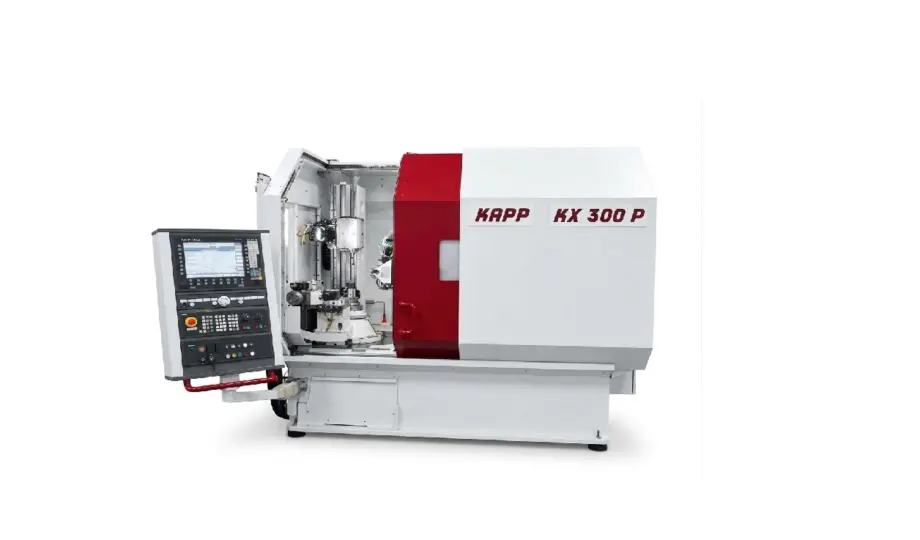
Generating gear grinding with tooth flank topography modification is widely regarded as the most productive and precise finishing technology in modern high-volume production. At ZKZ Gears, we use advanced CNC-controlled generating gear grinders fitted with worm grinding wheels. Since this process runs at greatly increased cutting speeds, it ensures excellent repeatability of geometrical parameters, significantly quieter gear operation, and complete elimination of hardening distortion on the tooth flanks. As a result, generating-ground gears set global standards for the most demanding drive applications.
How Does Generating Gear Grinding Work?
Generating grinding is a generating process in which the required involute profile is produced through continuous, numerically controlled multi-axis interpolation. Because the process closely simulates the meshing of a worm and worm wheel, the machine performs continuous machining without indexing individual teeth.
Accordingly, by smoothly rotating the workpiece while simultaneously varying the radial distance and applying axial feed, the grinder produces an ideal tooth profile and allows any required geometrical corrections to be applied. In addition, synchronized movement along the axis provides precise access to every point on the tooth flank. This process therefore enables micro-topography to be created, including profile and lead modifications, which directly results in an optimal contact pattern under load.
Depending on the required part geometry, operators use two basic machining variants:
-
Axial method: In this method, the machine feeds along the axis of rotation of the workpiece. The involute is generated directly by the profile envelope, providing the highest surface quality across the full face width of the gear.
-
Radial method: This technology is particularly suitable where space is limited or the part has specific geometry, as it significantly reduces the infeed time of the worm grinding wheel.
Products in the ZKZ Gears Portfolio Finished by Generating Grinding
Due to its high productivity and excellent finish quality, ZKZ Gears uses worm-wheel generating grinding to finish a wide range of products after hardening.
Across our full production range, we use this process for:
-
Spur and helical cylindrical gears: We finish tooth flanks after induction hardening or carburizing on external gears.
-
Gear shafts and pinions: We grind involute teeth while maintaining micron-level coaxiality with the bearing seats.
-
Worm gears – worms: We precisely grind the tooth profiles of involute and globoid worms after heat treatment.
-
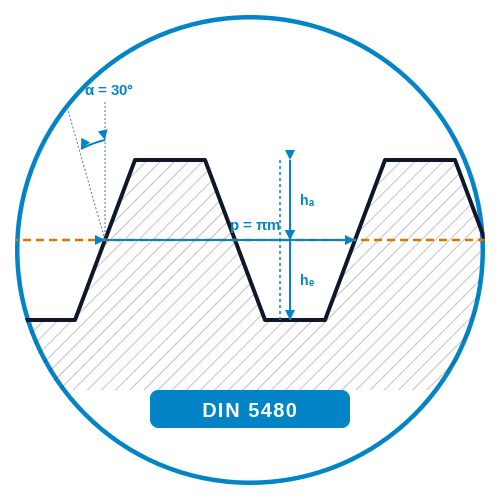
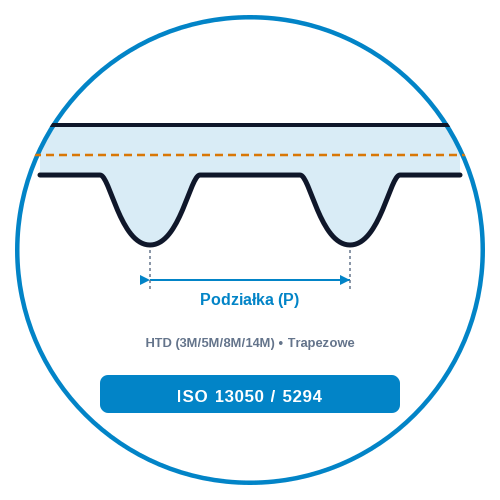
Timing belt pulleys and sprockets: We finish highly loaded drive wheels with stringent requirements for quiet operation.
-
External involute splines: We grind the flanks of splined couplings operating under variable loads.
-
Prototype and production gears: We manufacture gears for the automotive, robotics, and aerospace industries.
Production Range and Quality Parameters for Generating Gear Grinding
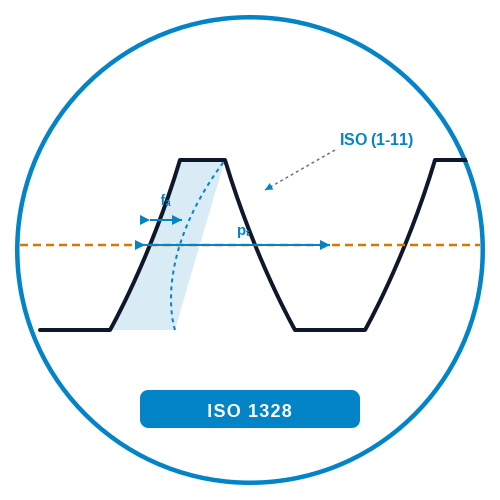
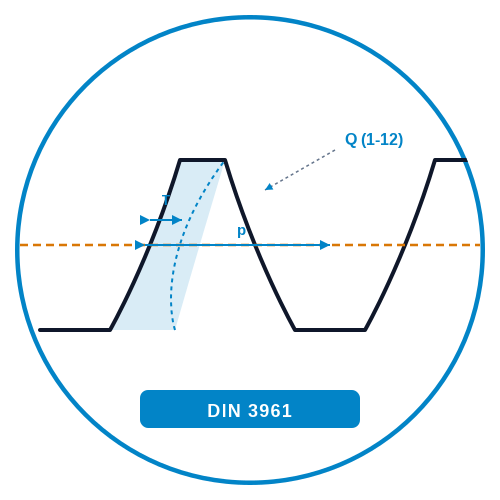
At ZKZ Gears, we carry out generating grinding of cylindrical gears in accordance with the stringent industrial standards ISO 1328 and DIN 3962:
| Technical parameter |
ZKZ Gears capabilities |
| Gear accuracy grade |
3 – 5 according to DIN 3962 / ISO 1328 |
| Module range ($m$) |
from m = 0,5 to m = 8 |
| Maximum outside diameter |
up to 350 mm |
| Tooth lead geometry |
Spur and helical teeth |
| Topography modifications |
Full profile modification (crowning, tip and root relief) |
| Production batch size |
Medium, large, and high-volume production |
Technology Comparison: Generating Grinding vs. Profile Grinding
The choice of finishing technology depends on batch size, geometry, and specific design requirements. The table below therefore presents the key technical differences between the two main grinding methods:
| Feature / Parameter |
Generating Grinding (Worm Wheel) |
Profile Grinding (Form Wheel) |
| Grinding tool |
Worm grinding wheel (continuous motion) |
Formed profile grinding wheel (single tooth) |
| Machining sequence |
Continuous machining (all teeth simultaneously) |
Indexed machining (one tooth at a time) |
| Production throughput |
Extremely high (short cycle times) |
Medium / low (longer machining time) |
| Internal gearing |
Limited / not possible |
Possible with a special grinding head |
| Tool run-out clearance |
Requires greater run-out clearance |
Can machine where space is limited |
| Surface roughness (Ra) |
$Ra < 0,3(characteristic texture) |
Ra < 0,2 (longitudinal marks) |
| Optimal application |
Medium- and high-volume production of external gears |
Single-part production, very large gears, internal gearing |
Engineering Insights: Did You Know?
-
Reducing NVH through topography modification: Gear noise (often described as “whine”) is primarily caused by tooth deflection under load and incorrect contact at the edges. Topography modification allows the profile to be corrected in micron-scale increments. As a result, under full load, the tooth deflects to the ideal theoretical shape.
-
High-pressure cooling: To effectively prevent grinding burns, which cause undesirable tensile stresses and localized tempering of the material, advanced nozzles deliver cooling oil at a velocity matching the peripheral speed of the grinding wheel. The process often runs at pressures exceeding 10 bar.
Applications and Industrial Sectors
Thanks to its excellent geometrical performance and high productivity, generating gear grinding is used in industrial sectors that require maximum drive reliability and quiet operation:
-
Automotive & E-Mobility: Gearboxes for electric and hybrid vehicles, where engineers prioritize low noise and vibration levels (NVH).
-
Industrial gearboxes and reducers: Highly loaded drive systems used in heavy-duty and construction machinery.
-
Robotics and automation: Precision drive components for actuators, cycloidal gearboxes, and industrial robots.
-
Power hydraulics: Finishing gears for high-pressure pumps with zero internal leakage.
-
Machine-building and aerospace industries: Components for equipment subject to the most stringent fatigue-life requirements.
Metrology and Quality Control at ZKZ Gears
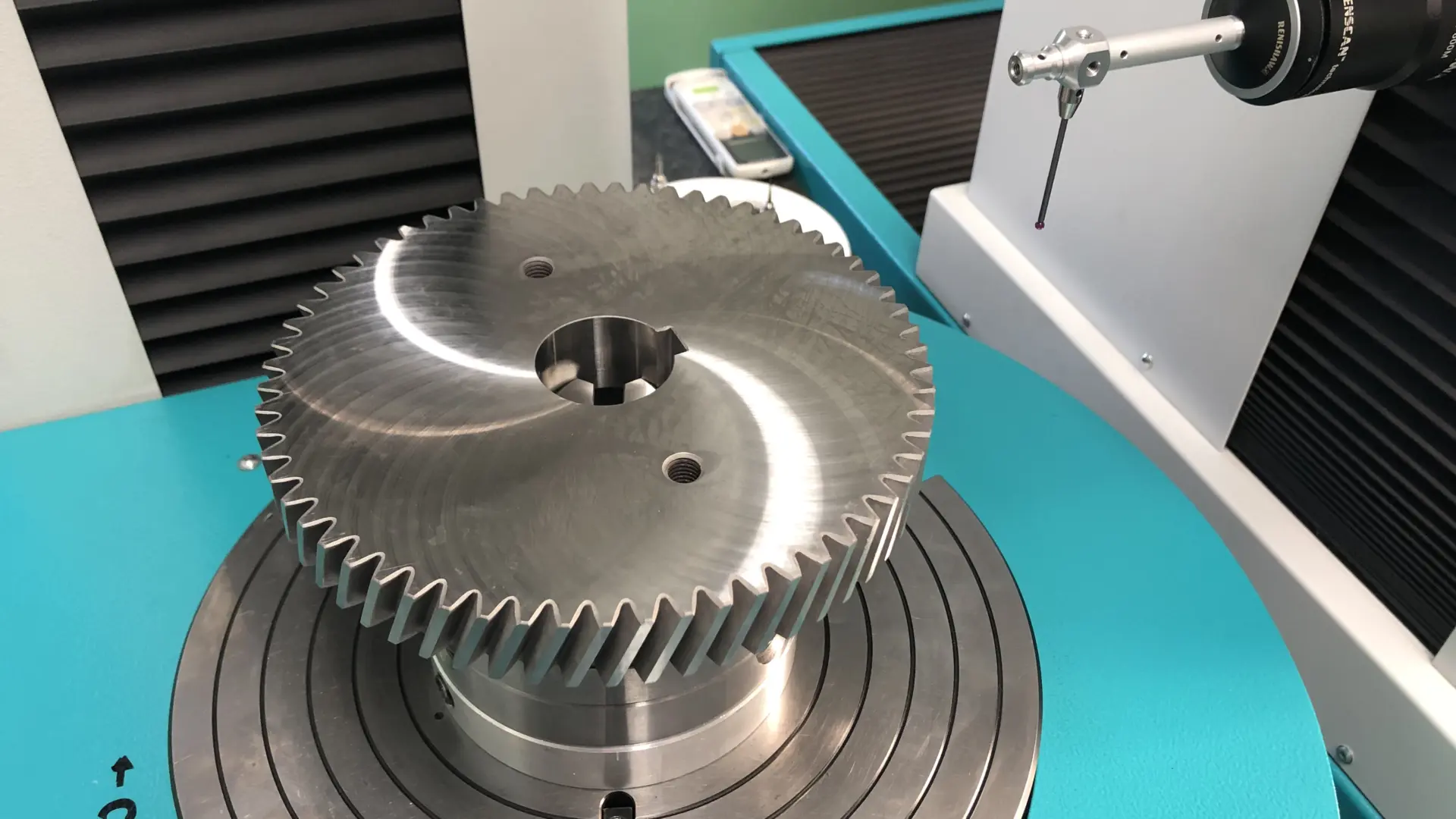
To ensure precise conformity with the nominal topography, every gear undergoes comprehensive metrological inspection in our laboratory after generating grinding:
-
Involute, tooth lead, and pitch measurements: The dedicated WENZEL WGT 400 gear measuring machine performs precise analyses of gear geometry.
-
3D topography analysis: Our laboratory technicians verify the applied modifications (crowning, lead crowning, and profile modifications).
-
Radial runout inspection: The WENZEL LH 108 coordinate measuring machine performs detailed runout deviation measurements.
Explore Related Machining Technologies at ZKZ Gears
Precision generating grinding is an important part of our integrated production system. We invite you to explore the other processes we offer:
-
Alternative finishing process: Learn about profile grinding of gears.
-
Special gears: See how we grind and manufacture APEX herringbone gears.
-
Heat treatment: Discover the benefits of CNC induction hardening and hybrid carbo-nitriding (Patent PL 237076).
-
Comprehensive capabilities: Browse the full list of services in the ZKZ Gears machining technologies section.