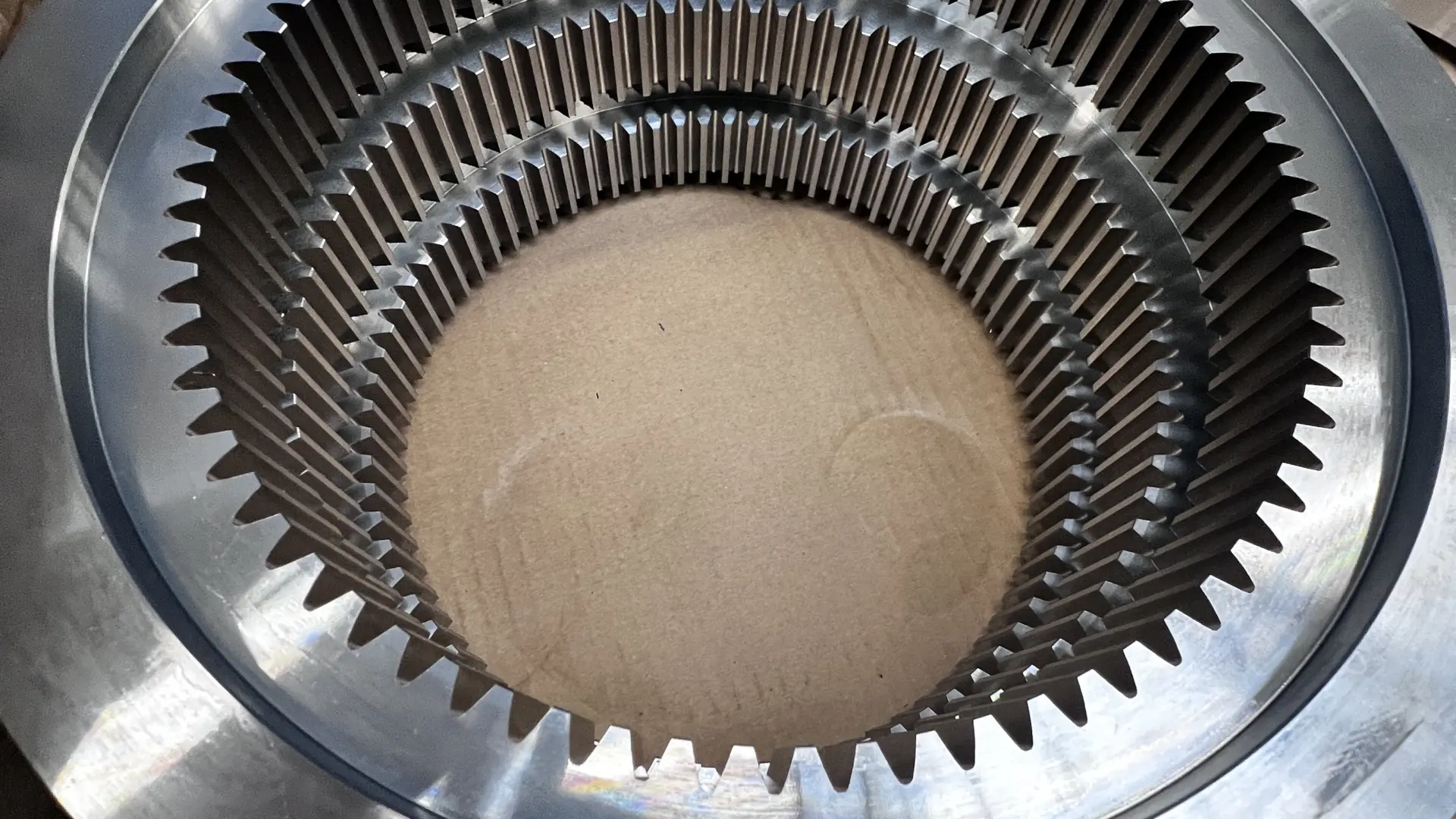
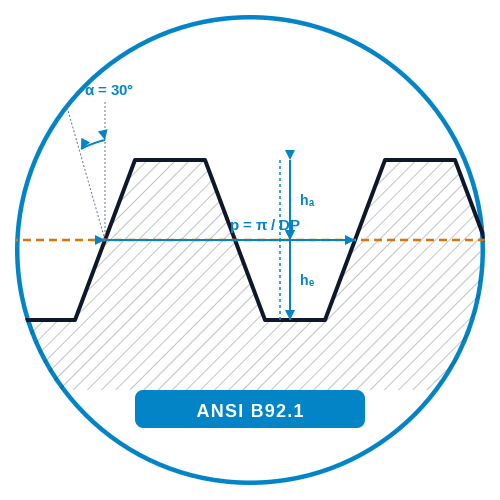
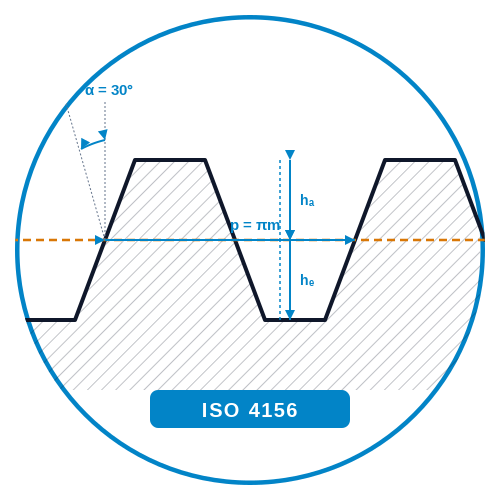
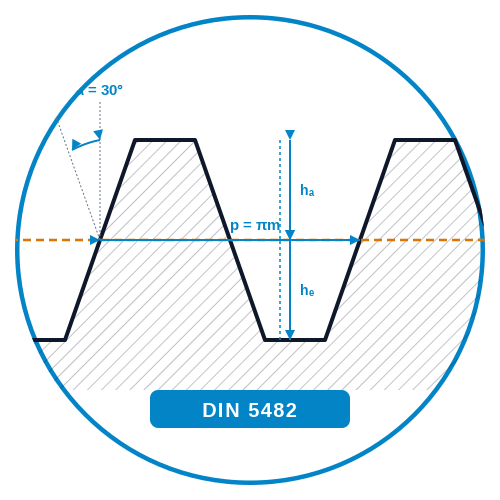
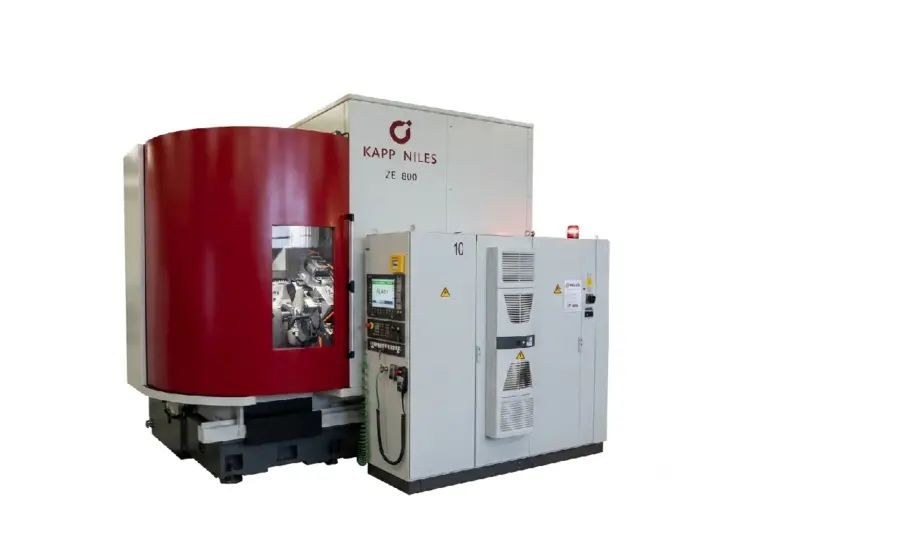
Profile grinding of internal gears on the Niles ZE 800 grinding machine from KAPP NILES is an advanced finishing process. This method is intended primarily for the most demanding planetary gears, internal ring gears and internal splines. The machine is also designed to process components after heat treatment, carburizing or nitriding. As a result, it effectively removes hardening distortion and achieves the highest precision in the tooth involute.
Furthermore, the dedicated arm and spindle for internal grinding on ZE series machines enable form grinding of tooth spaces. This provides full static and dynamic stiffness, identical to that achieved when machining external gears.
Types of Gears and Components Machined on the Niles ZE 800
Thanks to the outstanding technological flexibility of the Niles ZE 800, we can profile-grind a wide range of gears and special profiles:
1. Internal Gears and Profiles:
-
Internal ring gears and planetary gear rings: Planetary gearbox housings with the highest requirements for quiet operation.
-
Splined and clutch sleeves: Components with internal involute or straight-sided splines.
-
Internal splines and serrations: Involute and special form-fit connections with tight fit tolerances.
-
Blind internal gears: Internal ring gears terminating at a shoulder or flange.
2. External Gears and Profiles (Full Range):
-
Spur gears: Conventional gears with precise profile modifications.
-
Helical gears: Gears machined across a wide range of helix angles.
-
Pinions and gear shafts: Transmission shaft components with considerable length and overall dimensions.
-
Gear clusters and multi-stage gears: Gears located close to shaft shoulders.
-
External splines and splined shafts: Involute, straight-sided and asymmetric involute profiles.
3. Special Geometries and Profiles (Non-Involute):
-
Gears with cycloidal and arcuate profiles: Used in specialist gear drives.
-
Gear pump and screw pump rotors: Components requiring sealing performance and precise surface topography.
-
Timing belt pulleys: Precision pulleys for belt drives.
-
Prototype pinions and gears with asymmetric profiles (Bi-bias): Featuring dedicated NVH modifications.
Key Parameters and Technological Capabilities of the Niles ZE 800
-
Workpiece diameter range: Up to 800 mm.
-
Gear module range m: From 0.5 to 20 (optionally up to 25).
-
Gear face width: Up to 600 mm.
-
Helix angle beta: From -45° to +120°.
-
Achievable accuracy grade: ISO 3 – ISO 5 (according to DIN 3962).
-
Surface roughness: Ra 0.3 – 0.4 µm.
Process Benefits and Features
-
Integrated in-process measurement system: The built-in probe enables automatic measurement of pitch, runout, profile and lead directly on the machine table, both before and after machining.
-
Involute and lead modifications: The machine software enables advanced profile corrections, including tip relief and profile and lead crowning. This optimizes the contact pattern and reduces gear noise under load (NVH).
-
Use of profile grinding wheels (CBN and dressable wheels): Compatibility with ceramic alumina wheels (dressed on the machine using a diamond dresser) and electroplated CBN wheels allows the process to be tailored flexibly to production batch size.
-
Direct-drive table: An electric drive without intermediate gearing effectively eliminates backlash. This achieves high indexing accuracy when grinding heavy gears.
Profile and Lead Corrections
Profile and lead corrections are used primarily to optimize the contact pattern under load. They also directly help reduce noise across the entire gear train.
Profile Modifications
-
Tip relief / tip chamfer: Material is removed at the tooth tip. This softens tooth engagement and prevents interference.
-
Root relief: Tooth root modification that improves smooth entry into the mesh.
-
Profile crowning / profile flank modification: An arced modification over the full involute height. This ensures optimum contact under varying loads.
-
Profile angle modification / fHα: A change in the involute pressure angle that compensates for thermal and mechanical distortion.
Lead Modifications
-
Lead crowning: An arced reduction in tooth thickness towards both ends of the face width. This prevents edge contact when shafts twist.
-
Lead taper / end relief: Relief of the tooth face edges on one or both sides.
-
Helix angle modification / fHβ: A linear deviation of the helix that compensates for axial deflection of shafts and housings.
Freeform Modifications (3D Topography)
This is a non-harmonic combination of profile and lead modifications. It therefore enables the creation of any asymmetric surface topography (Bi-bias modification).
Grinding from Solid
This method involves cutting gear spaces directly into a smooth cylinder or sleeve after heat treatment, without preliminary gear shaping or hobbing.
-
Applications: Primarily for small and medium modules, as well as prototype and low-volume production.
-
Benefits: Eliminates the need for costly soft-machining tools. It also avoids hardening distortion in the finished tooth space and significantly shortens the process chain.
-
Requirements: High-efficiency grinding using highly porous wheels (e.g. ceramic alumina or electroplated CBN) with intensive high-pressure coolant delivery. This prevents grinding burns.
Freeprofile Grinding
Advanced machining technology on multi-axis CNC profile grinders (such as Niles and KAPP machines) enables the grinding of non-involute profiles and custom geometries.
-
Geometric flexibility: Ability to grind gears with involute or cycloidal profiles, arcuate gears, special splines and asymmetric profiles.
-
Numerically controlled dressing (NC dressing): The wheel profile is generated automatically using a multi-axis-controlled diamond dresser. This enables the production of any mathematically defined curve (freeform).
-
Applications: Aerospace gears, prototypes, specialist screw and gear pumps, pulleys, and pinions with highly modified NVH profiles.