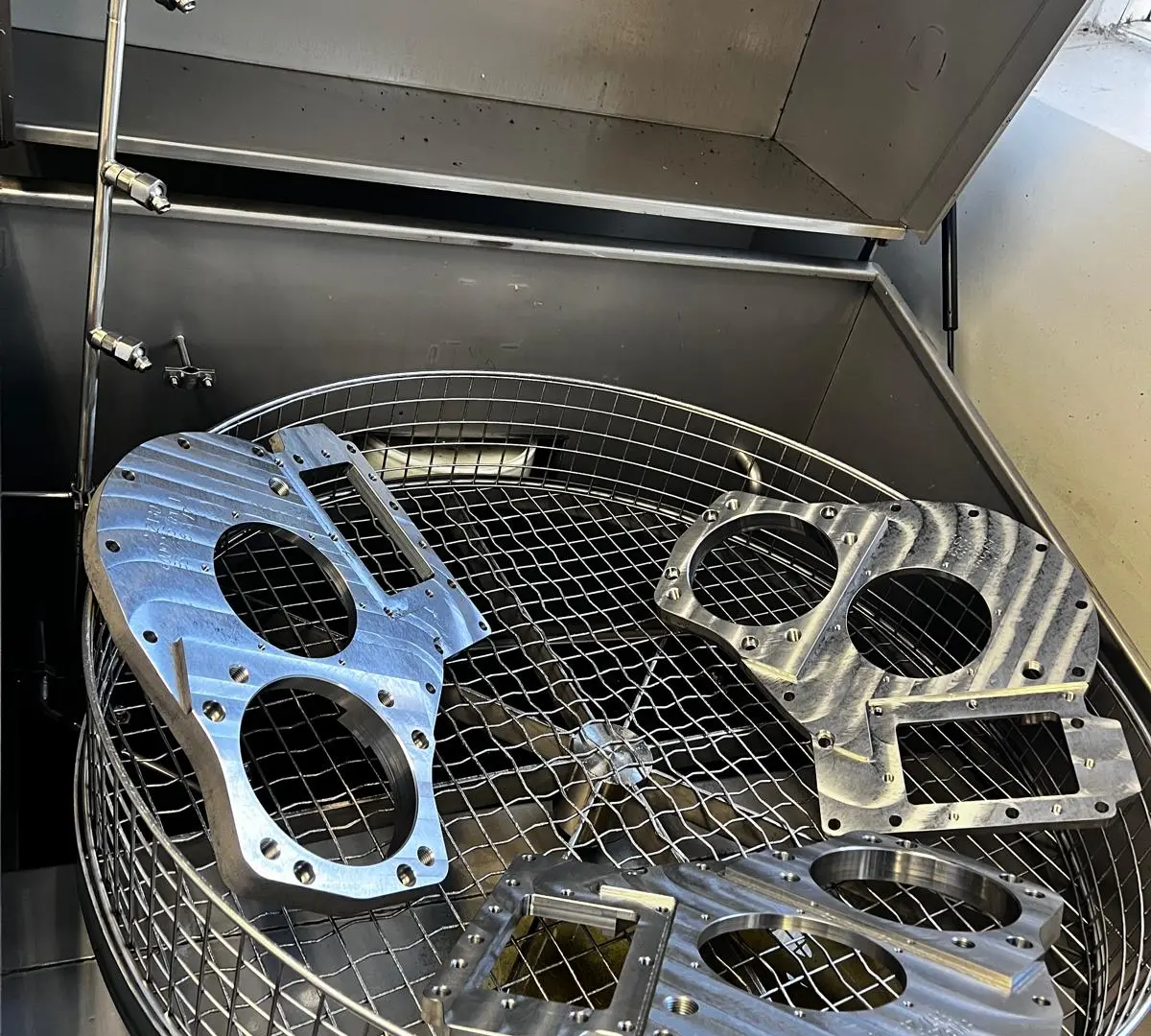
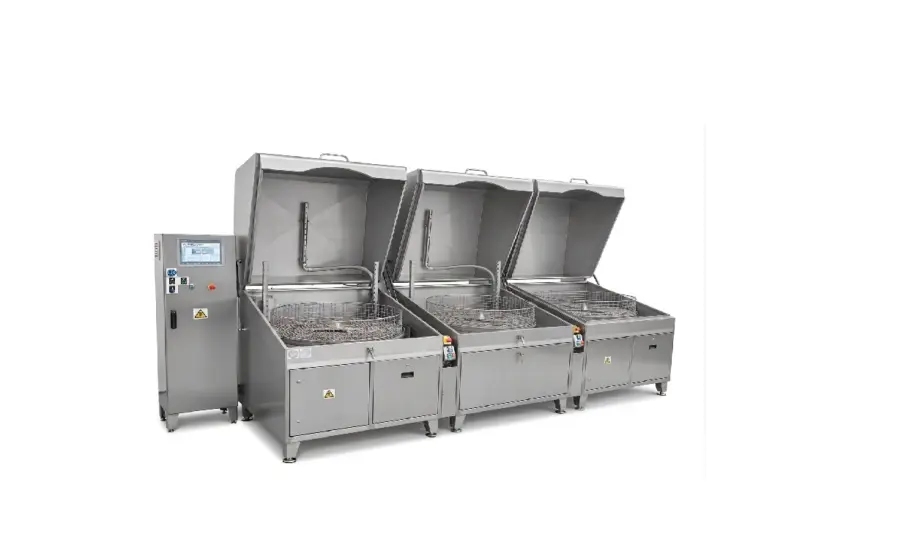
Cleaning and Corrosion Protection of Gears and Machine Parts
Professional cleaning and corrosion protection of gears are key finishing operations. They determine the components’ technical cleanliness and corrosion resistance. Residual oils, coolant or grinding swarf can lead to rapid wear of gearboxes. That is why at ZKZ Gears we combine precision cleaning in industrial washing machines with a range of corrosion protection options. We also tailor the process to storage and transport requirements.
Cleaning Methods Used at ZKZ Gears
Before preservation, components must be completely free of machining residues. To achieve this, we divide the cleaning process into specialised stages:
Industrial Cleaning Processes (Ultrasonic and Spray)
Depending on the size and geometry of the component, we select the appropriate chemical cleaning baths. Spray cleaning effectively rinses deposits from exposed surfaces. Ultrasonic cleaning, in turn, removes microscopic contaminants from hard-to-reach areas. This enables us to clean tooth spaces, lubrication channels and threaded holes thoroughly.
Hot-Air and Vacuum Drying
After cleaning, components are immediately subjected to intensive drying. Rapid moisture evaporation prevents stains and bloom from forming. This ensures that precision-ground surfaces remain in perfect condition.
Corrosion Protection Options for Components
After cleaning, we select the protective coating. We therefore offer solutions tailored to the application:
-
Spray-applied protection (oils and waxes): A thin layer of preservative oil is applied. This provides excellent temporary protection during storage.
-
QPQ coating (Quench-Polish-Quench): An advanced thermochemical treatment that forms a black, corrosion-resistant layer with increased hardness.
-
Zinc plating (galvanising): An electroplated coating applied to selected components that do not operate in the tooth zone. It provides long-term resistance to moisture.
-
VCI protective paper packaging: VCI paper releases volatile corrosion inhibitors. These form an invisible molecular layer on the steel surface, making this an ideal solution for sea transport.
Interesting Facts About Steel Preservation and Protection Methods
Protection of metal machine parts has evolved over centuries. Here are some fascinating facts from the history and technology of preservation:
-
Ancient weapon blackening: Early methods of protecting steel involved immersing hot metal in linseed oil or animal fat. This produced a black oxide coating, the forerunner of modern chemical processes such as black oxide treatment and QPQ technology.
-
The invisible VCI shield: VCI technology uses volatile compounds that evaporate from special paper. Interestingly, these molecules settle on the steel as a monolayer just a few nanometres thick. This protects the metal without the need to coat it with a heavy grease.
-
Whale oil and cosmoline: Before synthetic preservative oils were developed, the military used a thick petroleum- and wax-based grease known as cosmoline. Whale oil was also widely used to protect steel mechanisms.
Why Are Proper Cleaning and Corrosion Protection Essential?
Using an integrated cleaning process at ZKZ Gears delivers tangible operational benefits:
-
High technical cleanliness: The absence of swarf and abrasive dust extends the service life of the oil and bearings.
-
Protection in demanding conditions: Protection against rust during sea transport.
-
Ready for assembly: Components are delivered to the customer clean and ready for installation.
Explore the full range of ZKZ Gears technologies
The cleaning and corrosion protection of gears process completes the entire production cycle. Explore our other services:
More information about international technical cleanliness standards in the machinery industry is available on the website of the Polish Committee for Standardization (PKN).