Heat Treatment of Metals and Alloys – ZKZ Gears
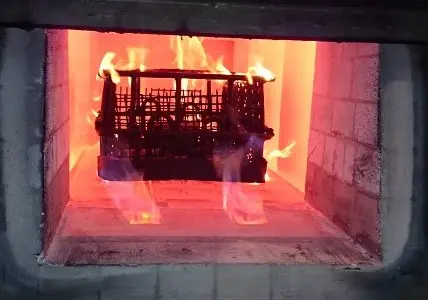
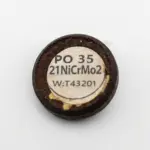
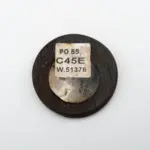
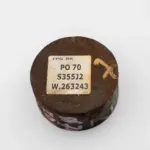
Heat treatment of metals is used to modify a material’s microstructure in a controlled manner. It enables the required hardness, fatigue strength and resistance to abrasive wear to be achieved in components. Since the stability and reliability of drive systems depend on the physicochemical properties of steel, this process is critical. For this reason, heat treatment of metals involves precisely controlled heating, soaking and cooling in a protective atmosphere. Consequently, process parameters are selected precisely according to the steel’s chemical composition, the component cross-section and the required hardenability.
Available metal heat treatment processes at ZKZ Gears
We use a range of advanced processes to manufacture highly loaded components. This enables us to select the process to suit the component’s intended application:
-
Carburising and carbonitriding: These are diffusion processes. They produce a hard martensitic case while retaining a ductile core.
-
CNC induction hardening: This is a precise, surface heat treatment of metals process. It hardens selected areas of a component using high-frequency currents.
-
Through-hardening and quenching and tempering: This combines hardening with high-temperature tempering. The result is excellent tensile strength and high impact toughness.
-
Softening and stress-relief annealing: These are preliminary processes. They remove welding and casting stresses, significantly improving the material’s machinability.
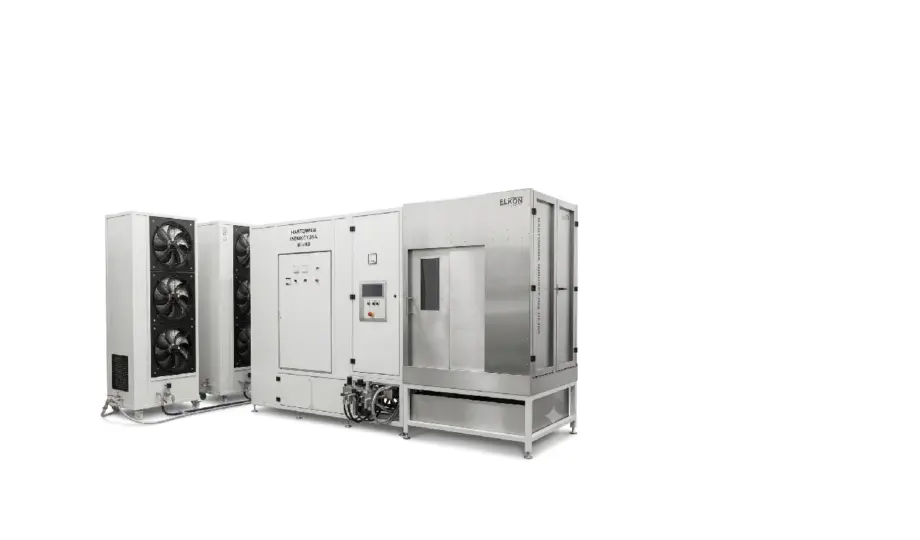
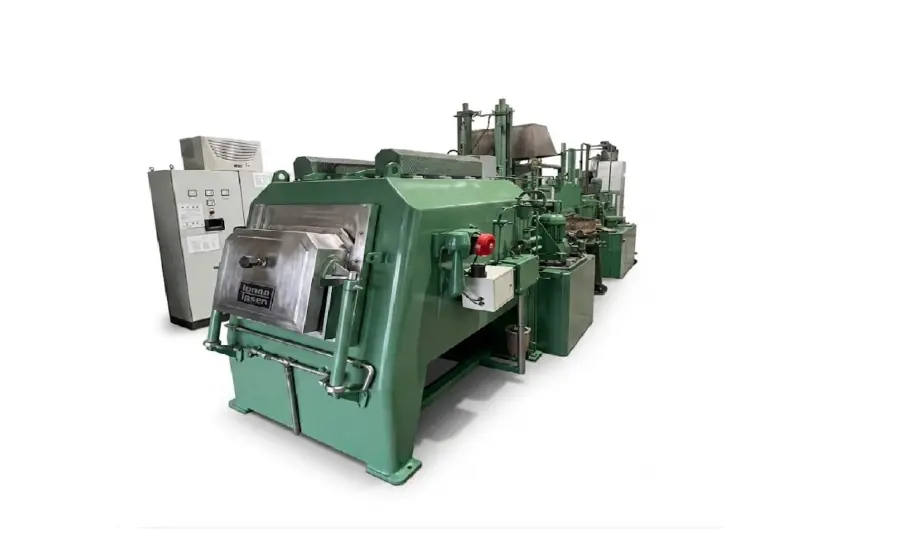
For detailed descriptions of our processes and furnace specifications, see the ZKZ Gears machine park.
ZKZ Gears products subjected to heat treatment
Full control over our manufacturing processes enables us to impart outstanding performance characteristics to our products:
-
Cylindrical and double-helical gears (APEX): The components have high tooth surface hardness. They also offer full resistance to pitting and spalling.
-
Shafts and gear shafts: These feature hardened bearing journals and a ductile core.
-
Worm gears and worms: The components are carburised and hardened, then ground to micrometre-level precision.
-
Splines and couplings: These sliding and fixed components offer increased wear resistance.
-
Sleeves and spacer rings: These components are highly resistant to seizure under demanding operating conditions.
Explore our full product range on the ZKZ Gears production range page.
R&D innovations: Patent P.400965 and the heat treatment of metals
Heat treatment of metals causes hardening distortion. To eliminate it, we developed patent P.400965, entitled: “Method for shaping teeth in corrected spur gears with an involute profile”.
This solution represents a significant step forward in finishing technology. It makes it possible to achieve excellent low-noise performance and durability.
Technical description of invention P.400965
Traditional involute correction methods carry a risk of stress concentration. The P.400965 solution therefore introduces an innovative method for digitally shaping gear geometry directly on CNC machines.
Key technical principles:
-
Optimised involute correction: Precise profile crowning eliminates edge contact between gear teeth.
-
Three-dimensional flank topography (3D): Flexible tooth trace modification compensates for shaft deflection.
-
Versatile application: The method covers external and internal spur and helical gears.
Advantages and industrial benefits:
-
Higher load capacity: Optimum pressure distribution prevents surface flaking.
-
Low noise (Low-NVH): Vibration and noise are significantly reduced.
-
Reduced energy consumption: Lower friction losses improve overall drive efficiency.
-
Distortion compensation: Integrating correction into the grinding process compensates for the effects of the preceding heat treatment of metals.
Engineering insights: Did you know…?
Retained austenite – a hidden threat to strength
When cooling is too rapid, some of the structure does not transform into martensite. This produces what is known as retained austenite. Under load, it can transform into untempered martensite, causing tooth fractures. For this reason, ZKZ Gears carries out rigorous X-ray inspection and deep cryogenic treatment.
Effects of internal oxidation
Traditional carburising in endothermic atmospheres forms alloy oxides along grain boundaries. This reduces hardenability and creates a soft layer. Modern processes therefore use low-pressure carburising (LPC), which completely eliminates this phenomenon.
Learn more about the physicochemical standards for metals on the Polish Academy of Sciences website.
Quality control and metrology of hardened layers
Every heat treatment of metals process at ZKZ Gears is subject to rigorous inspection in our laboratory. In particular, we verify:
-
Effective case depth (CHD / EHT) based on the Vickers microhardness profile.
-
Percentage of retained austenite and grain size.
-
Surface roughness and distortion using CMM measuring machines.
Explore related technologies at ZKZ Gears
Heat treatment of metals prepares the material for final finishing. We therefore invite you to learn more about the subsequent production stages: