Gears and Gearbox Components Manufactured Using WEDM – ZKZ Gears
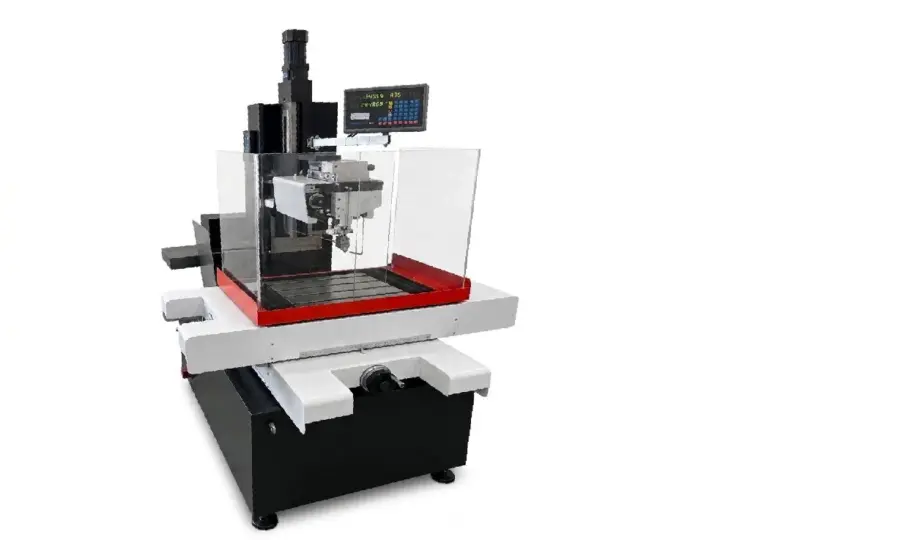
EDM (Electrical Discharge Machining) is an advanced metalworking process and one of the most technologically sophisticated methods of shaping metals. By using controlled electrical discharges, this process enables the precise manufacture of various gear components without applying mechanical force to the workpiece. In addition, wire electrical discharge machining (Wire EDM) enables uncompromising machining of materials of any hardness. As a result, at ZKZ Gears this technology is used to carry out the most demanding engineering projects, complementing conventional cutting processes.
Principle of Electrical Discharge Machining
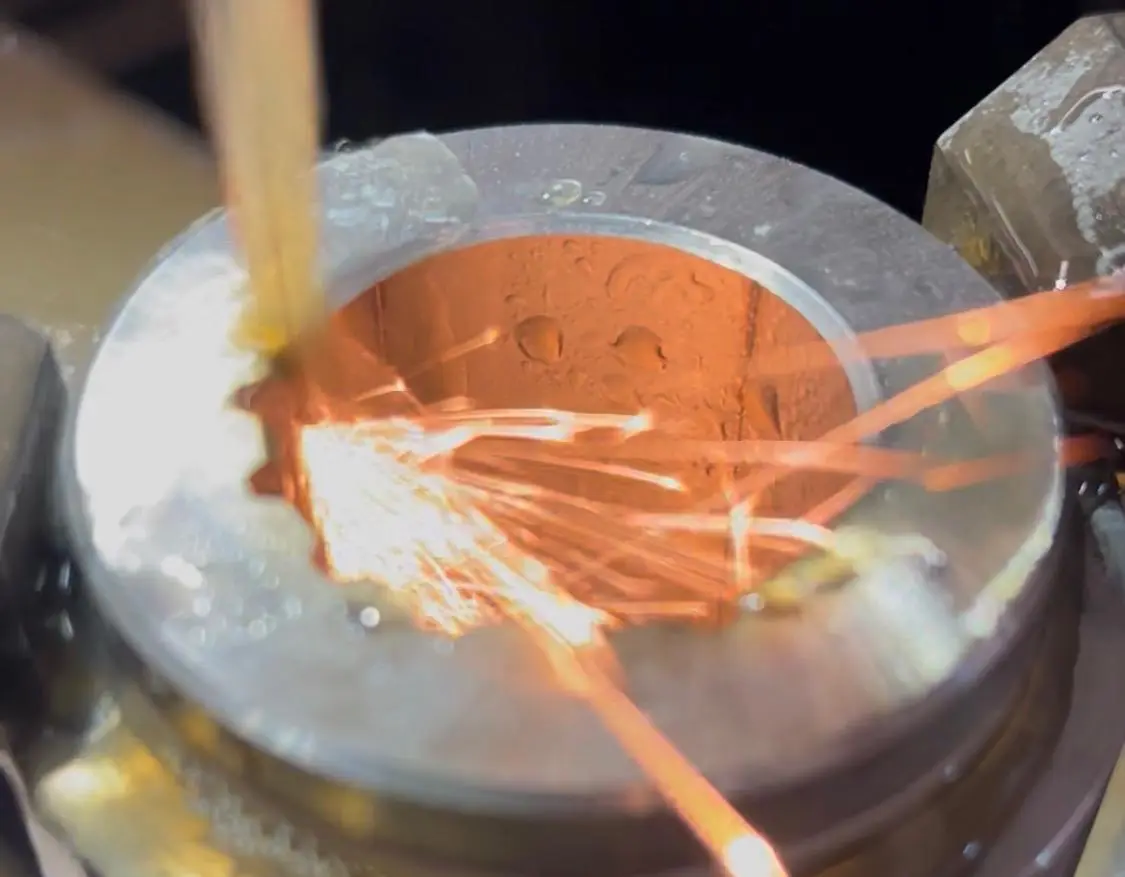
The EDM process relies on the precise use of electrical energy converted into heat. During machining, both the workpiece and the electrode (wire) are immersed in a dielectric fluid. At the same time, an advanced pulse generator applies voltage, creating a micrometre-scale working gap between the components. A spark discharge then locally melts and vaporises microscopic volumes of metal.
The resulting particles are immediately flushed away by the pressurised flow of dielectric fluid. Since the process is repeated thousands of times per second, CNC control guides the wire precisely along the programmed CAD/CAM path. Because no cutting forces are generated, distortion and geometric deformation are avoided, which is particularly important when machining thin-walled components.
Types of EDM Used at ZKZ Gears
Depending on the geometry and technical requirements of the component, our facility uses two EDM processes:
-
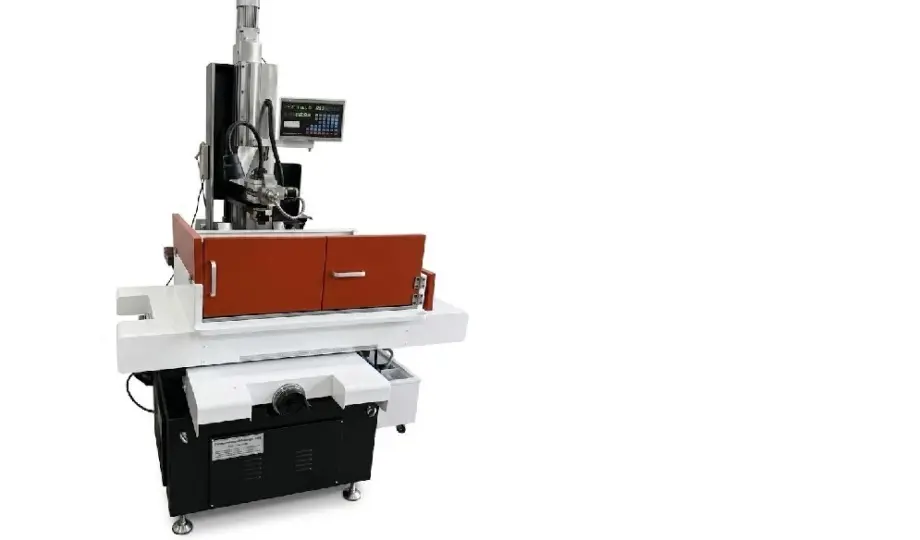
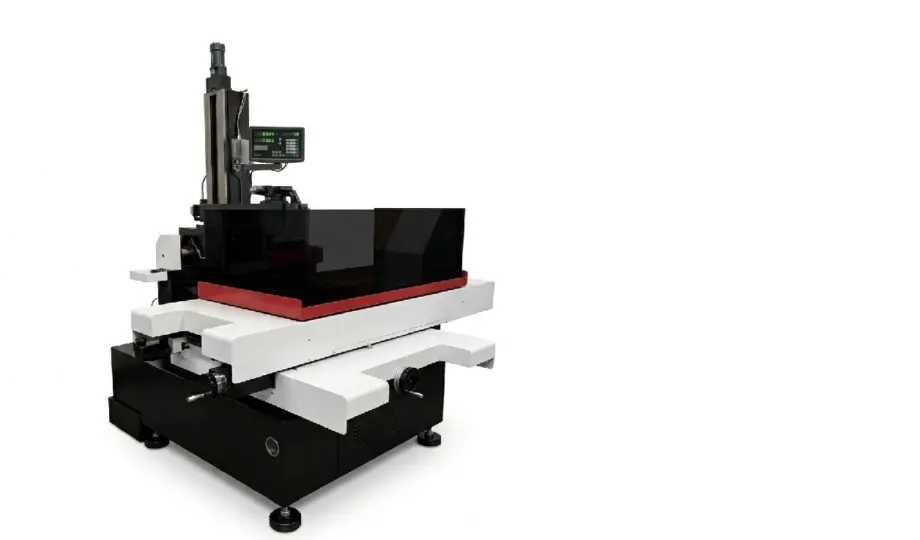
Wire EDM: This is the primary method used to cut complete external and internal contours through the full thickness of a workpiece. The working electrode is a continuously moving brass or coated wire. For closed profiles, cutting is preceded by drilling a start hole.
-
Sinker EDM: This method reproduces the shape of a dedicated electrode deep within the material. It is therefore used to produce cavities, recesses, blind gear teeth and formed features.
Wide Range of EDM Products Manufactured by ZKZ Gears
Since no expensive form tools (such as module cutters or broaches) are required, EDM is highly cost-effective for prototype, one-off and small-batch production. Accordingly, ZKZ Gears uses wire EDM to manufacture a broad portfolio of transmission components:
-
Bevel gears: Cutting precise straight-tooth profiles for bevel gears and gear crowns.
-
Cylindrical gears: Manufacturing external and internal spur gears, including components with micro-modules and non-standard modules.
-
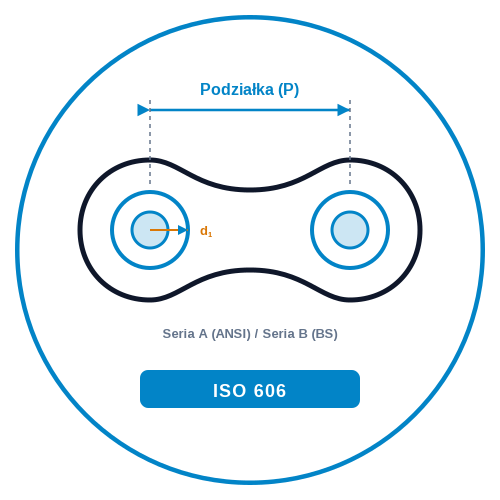
Sprockets and chain drives: Cutting sprockets for roller chains and special chains while maintaining precise pitch geometry.
-
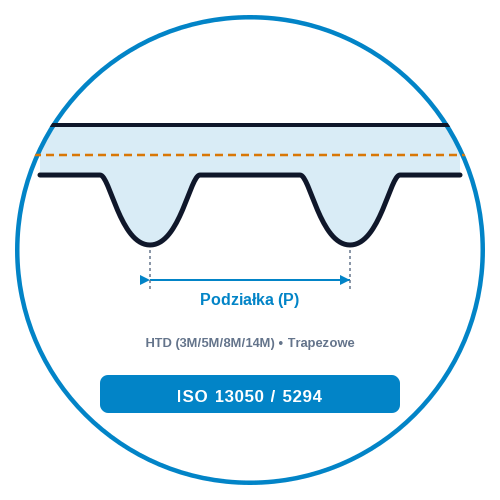
Timing belt pulleys: Manufacturing precision pulleys with HTD, STD, T and AT profiles, as well as custom profiles.
-
Gear racks: Precision cutting of gear rack sections to very high accuracy grades.
-
Worm gears and worm wheels: Manufacturing prototype worm wheel profiles and profile gauges.
-
Splines and involute connections: Manufacturing internal and external splined, keyed and involute connections with zero backlash.
-
Segment gears, ratchet gears and impulse rings: Components for the optical sector, aerospace industry, R&D and measuring equipment.
-
Non-involute and asymmetric profiles: Producing non-standard pressure angles and special profiles for innovative gear drives.
-
Gauges, dies and masters: Manufacturing precision reference gauges for the quality control department.
Machining After Induction Hardening – Precision Guaranteed
It is important to note that the key requirement for EDM is the electrical conductivity of the material, not its hardness. For this reason, EDM is very often performed after final heat treatment. This eliminates the problem of hardening distortion, ensuring micrometre-level dimensional accuracy without the need for difficult and costly profile grinding.
Thanks to its extensive technological capabilities, ZKZ Gears closely integrates EDM cutting with its heat treatment department, which is equipped with a modern CNC induction hardening station:
| Induction hardening station parameter |
ZKZ Gears range / technical capabilities |
| Max. external diameter of workpiece ($\varnothing$) |
400 mm |
| Max. workpiece length / height |
1000 mm |
| Max. workpiece weight |
300 kg |
| Materials machined by EDM after hardening |
Carburised and hardened steels (up to 60–65 HRC), tool steels, stainless steels, nickel alloys, titanium and cemented carbides |
Comparison of Gear Machining Technologies
To better understand the advantages of wire EDM, it is useful to compare it with conventional gear manufacturing methods:
| Feature / Parameter |
Wire EDM |
CNC Gear Hobbing |
Fellows Gear Shaping |
| Machining mechanism |
Electrical discharges |
Chip-forming gear hobbing |
Reciprocating cutting |
| Cutting forces |
No mechanical forces |
High cutting forces |
Medium to high |
| Machining hard materials |
Excellent (after hardening to 65 HRC) |
Only before hardening (soft steel) |
Only before hardening |
| Special geometries |
Any 2D profile (no restrictions) |
Requires a dedicated hob |
Requires a gear-shaping cutter |
| Production throughput |
Low (precision-focused) |
Very high |
Standard |
| Tooling costs |
None (standard-purpose brass wire) |
High (expensive module cutters) |
High (special gear-shaping cutters) |
Engineering Facts: Did You Know?
-
Exceptional wire precision: The diameter of standard EDM wire is just $0{,}10\text{ mm} – 0{,}25\text{ mm}$. As a result, wire EDM can produce exceptionally small fillet radii at the tooth root, which cannot be achieved using conventional disc cutters.
-
Consistent geometry: The wire moves continuously during machining. Consequently, the worn section of the electrode is immediately replaced by fresh wire, completely eliminating tool wear as a dimensional factor when cutting thick gear rims.
Surface Quality and Fatigue Resistance
It should be noted that the high temperature of electrical discharges creates a thin resolidified surface layer (the so-called white layer). Since this layer can affect fatigue life in highly loaded components, ZKZ Gears uses advanced multi-pass strategies:
-
Rough cutting: Quickly removes the material allowance using higher-energy discharges.
-
Finishing passes (skimming): Performed with progressively reduced discharge energy. This achieves a surface roughness of Ra -0,4 , while reducing the resolidified layer to a negligible level.
Metrology and Quality Control of EDM Gears
To ensure the highest level of reliability, all components manufactured using EDM undergo rigorous metrological inspection in our laboratory:
-
Tooth profile and pitch measurements: Performed on a WENZEL WGT 400 gear measuring machine and a WENZEL LH 108 coordinate measuring machine.
-
Radial runout inspection: Ensures that the gear teeth are perpendicular to and coaxial with the mounting bore.
-
Surface roughness measurement: Confirms compliance with the stringent requirements set out in the technical documentation.
Explore Other Machining Technologies at ZKZ Gears
Precision wire EDM is only part of our manufacturing capabilities. Explore the full range of technologies offered by ZKZ Gears:
-
Gear profile finishing: Generating and form grinding of gears.
-
Thermochemical treatment: Hybrid carbonitriding (Patent PL 237076) and CNC induction hardening.
-
High-performance 5-axis milling: Power skiving technology and machining on GROB G350T machines.
-
Comprehensive machine shop: Explore the full range of machinery at ZKZ Gears.