
Tayo Koki VM 55
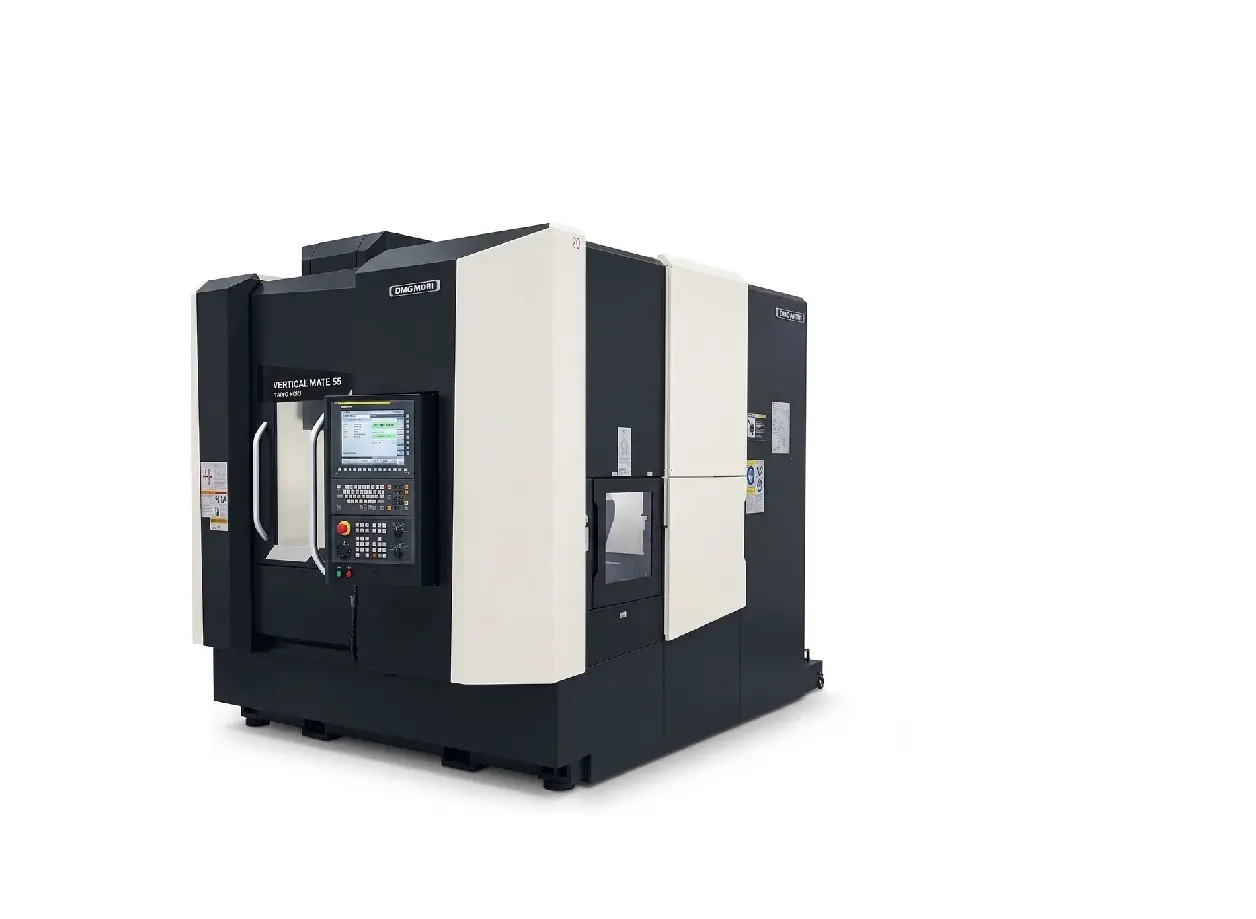

TAIYO KOKI Vertical Mate 55 – CNC vertical multi-process grinder at ZKZ Gears
TAIYO KOKI Vertical Mate 55 is a modern vertical CNC grinder designed for the complete machining of precision rotational surfaces. Thanks to its carefully engineered design, the machine enables highly efficient machining. As a result, it can grind internal and external diameters and end faces in a single workpiece setup.
Importantly, the vertical orientation of the workpiece spindle axis significantly simplifies the stable clamping of heavy, large-diameter components. Since the workpiece weight is supported directly by the table, deflection typical of horizontal cantilever clamping is reduced. Consequently, this solution is particularly advantageous for machining rings, housings, sleeves, gears, bearing components, and transmission parts.
ZKZ Gears products machined on the VM 55
In the ZKZ Gears machine park, the TAIYO KOKI Vertical Mate 55 grinder plays a key role in precision finishing. Primarily, this machine is used to machine the following products:
- Internally and externally toothed gears: In particular, we machine gear housings and rims after carburizing and hardening, where the gear teeth must remain perfectly coaxial with the datum bores and face.
- Gear sleeves and clutch sleeves: This technology enables us to precision-grind cylindrical and tapered bores, as well as internal splines. The process also includes finishing the external guiding surfaces.
- Gear shafts and stepped shafts (large components): In addition, the machine grinds bearing journals, sealing-ring seats, and datum faces in a single setup.
- Gearbox housings and spacer rings: We also machine plates, sleeves, and large-diameter housings, for which end-face flatness and squareness are critical.
Integration of grinding processes
The main advantage of the Vertical Mate 55 in the ZKZ Gears manufacturing process is that it can perform several operations without changing the workpiece datum:
- Grinding cylindrical and tapered bores,
- Grinding external diameters,
- Grinding end faces,
- Machining stepped surfaces,
- Finishing internal and external surfaces relative to a common axis.
Because machining is performed in a single setup, we achieve high concentricity between diameters and squareness of end faces. In addition, this solution effectively reduces radial and axial runout. The indexing head is positioned at 0° when grinding diameters, while at 22.5° it grinds external surfaces and end faces using an angled wheel.
Furthermore, the automatic magazine holds six grinding-wheel arbors. This allows separate tools to be used for roughing, finishing, bore grinding, external surface grinding, and face grinding. As a result, the process runs without unnecessary downtime.
Materials machined
The machine at ZKZ Gears efficiently machines both soft-state materials and components after heat treatment:
- Case-hardening steels: 16MnCr5, 20MnCr5, 18CrNiMo7-6,
- Heat-treated steels: 42CrMo4 and C45,
- Bearing and tool steels,
- Grey and ductile cast iron,
- Stainless steels,
- Non-ferrous metal alloys – subject to the appropriate grinding wheel selection.
For hardened transmission components, grinding effectively removes the controlled machining allowance left after turning. Consequently, the process precisely corrects ovality, taper, and distortion caused by carburizing and hardening.
Aluminium oxide or CBN wheels are used for hardened steels. For cast iron, the manufacturer specifies, among others, silicon carbide wheels. Therefore, the correct selection of bond, grit size, and wheel grade must take into account the workpiece material, contact area, and efficient coolant flow.
Accuracy and surface integrity
According to the manufacturer’s data, roundness of 1 µm can be achieved on a standard test workpiece. At the same time, concentricity, cylindricity, and squareness are maintained at 2 µm, while surface roughness reaches Ra 0.2 µm. These are test results, not a guaranteed tolerance for every workpiece.
However, when machining hardened steels, the risk of grinding burn, secondary tempering, white-layer formation, and tensile residual stresses must be continuously monitored. For this reason, process stability is ensured by effective cooling, regular wheel dressing, in-process measurement, and compensation for tool wear.
TAIYO KOKI Vertical Mate 55 technical specifications
| Parameter | Value / characteristics |
| Manufacturer | TAIYO KOKI |
| Model | Vertical Mate 55 |
| Machine type | Vertical multi-process CNC grinder |
| Internal grinding diameter range | Ø30–400 mm |
| Maximum external grinding diameter | Ø500 mm |
| Maximum internal grinding length | 300 mm |
| Maximum external grinding length | 325 mm |
| Maximum workpiece swing diameter | Ø550 mm |
| Maximum workpiece height | 450 mm (including tooling) |
| Worktable diameter | 550 mm |
| Maximum workpiece weight | 500 kg (including fixture) |
| Table speed | 20–350 rpm |
| Grinding wheel spindle speed | 2500–15 000 rpm |
| Tool mounting type | HSK-A63 |
| Indexing head positions | 0° and 22.5° |
| Tool magazine | Automatic tool change, 6 positions |
| Maximum grinding wheel diameter in magazine | Ø255 mm |
| Operations supported | ID, OD, and face grinding in a single setup |
| Programming | TAIYO KOKI GriPS II conversational software |
| In-process measurement | Optional in-process measurement with automatic correction |
| Specified roundness | 1 µm (on the manufacturer’s standard test workpiece) |
| Specified surface roughness | Ra 0.2 µm (on the manufacturer’s standard test workpiece) |
| Machine dimensions (width × depth) | Approximately 2715 × 4110 mm |
| Machine height | Approximately 2940 mm |
| Total weight | Approximately 11 000 kg |
Supported technologies

Cylindrical Hole Grinding
